
ONLINE PSYCHOTHERAPY IN CALIFORNIA
Shifting Relationship Patterns by Bringing You Back to Your Own Healing Intelligence
Insight Is Where It Starts,
But Not Where It Ends
If you've spent years gaining insight into your attachment issues, relationship patterns, or the unique challenges of ADHD or neurodivergence in relationships and still feel stuck, it's not because you haven't tried hard enough. Insight is just the beginning. Lasting change happens through the body, the nervous system, and the deeper parts of you that formed long before you had language for any of it.
You’re probably in the right place if you’re self-aware, emotionally intelligent, and stuck in the same relational patterns for years despite trying to change. Maybe some of these sound familiar:
You struggle with depression, anxiety, or relationship issues that feel bigger than circumstances alone
Difficulty in maintaining friendships or relationships that feel safe, consistent or connected
Relationships feel confusing or painful in ways you can't fully explain. Maybe you pull away and choose to be alone, or hold on too tight.
Emotional dysregulation such as shutting down, flooding with feeling, or saying things you later regret leaves you exhausted and ashamed.
You experienced something in childhood that violated your sense of safety or trust, or you have a history of abandonment or rejection, shaping your life in ways you haven't fully been able to move through
You've done the therapy and read the books, and you're ready for work that moves things at the level of the body, not just the mind

What my clients describe on the other side: letting someone close without bracing, conflict without collapse, closeness that doesn't require self-abandonment.
Imagine letting someone get close, and stay there, without waiting for the other shoe to drop. To feel conflict arise with a relationship, family member or friendship, and stay present with it rather than shutting down or spiraling. To feel rejection without it unraveling you for days. To stop abandoning yourself in order to keep the peace. To feel at home in your own body and your own life. To trust the inner knowing that was always there, buried beneath years of overthinking and self-protection.
This is what becomes possible when early attachment wounds are met with the right kind of care, working not just with your thoughts, but with your nervous system, your parts, and the relational imprints that formed long before you had words for any of it.
15+
Years practicing as a licensed psychotherapist
11
Years working in community mental health
5
Years in
Private Practice
Attachment-Based, IFS-Informed Therapy Options That Go to Where the Real Change Happens
All sessions are conducted online for CA residents.
Individual Psychotherapy
For those ready to change the patterns, not just understand them.
Explore Psychotherapy →
Ketamine-Assisted Psychotherapy (KAP)
For when the deeper material has been hard to reach.
Explore KAP →
Insurance not accepted · Out of Network insurance may be accepted · FSA/HSA may be accepted · Please inquire

Individual Psychotherapy
-
Attachment-based therapy that weaves together IFS-informed parts work, somatic-informed and trauma-informed approaches, attachment-focused EMDR, Jungian depth psychology, and creative expressive approaches. Not a single method, but an integrated way of working — with the body, the parts, the unconscious, and the therapeutic relationship itself as the vehicle for change.
-
Those who are self-aware, emotionally intelligent, and genuinely trying — and who are ready to move beyond insight and into the kind of change that happens at the level of the nervous system. Particularly well-suited for those navigating attachment trauma, complex trauma, depression, anxiety, rejection sensitivity, or the relational challenges of ADHD and neurodivergence in women.
-
Sessions are 50 minutes and held online. We typically begin weekly to build momentum and depth, adjusting to biweekly or monthly as the work evolves. Each session is guided by you — what feels most present, what the body is holding, what parts are showing up. There is no agenda to push through. We follow the thread together.
-
Individual therapy sessions: $225 per 50-minute session
Initial intake: $275 per 60-minute session
-
To stop bracing for relationships to fall apart. To feel conflict arise and stay present with it. To let someone close without waiting for the other shoe to drop. To feel at home in your own body and your own life. To trust yourself in the dating process and in getting to know someone romantically.
Ketamine-Assisted Psychotherapy
-
A clinically supported treatment that combines the neurological effects of ketamine medicine with deeper psychotherapy — specifically IFS-informed parts work, somatic-informed therapy, and attachment-based approaches. Offered in partnership with Journey Clinical's medical team, who manage all prescribing and medical oversight. This is not a ketamine clinic. The therapeutic relationship and integration work are central to everything.
-
Those who find certain wounds just out of reach. KAP may be particularly meaningful for those navigating treatment-resistant depression, complex trauma, attachment wounds, OCD, or deeply rooted relational patterns — especially where long-held protective defenses have made the deeper material difficult to access.
-
KAP follows a structured process: an intake session, medical consultation with Journey Clinical, one or more preparation sessions, a dosing session of two to three hours, and follow-up integration sessions. Dosing sessions are held online or in person. During the dosing session you will rest comfortably with an eye mask and music while Rachael holds a steady, attuned presence throughout. A general starting point is six to eight dosing sessions, spaced every one to two weeks.
-
KAP Intake Session (60 minutes): $275
Preparation & Integration Sessions (50 minutes): $225 per session
KAP Experiential Dosing Session (150 minutes): $675 per session -
Clients often describe a felt loosening of long-held defenses, greater access to their own inner wisdom, and shifts in mood and nervous system regulation that persist well beyond the session itself — particularly when combined with ongoing integration work.

Individual Intensives
-
A dedicated, uninterrupted block of time — 90 minutes to three hours — to turn toward a specific piece of your inner world with full presence and care. Drawing on IFS-informed parts work, somatic-informed therapy, inner child and attachment reparenting work, psychedelic-assisted therapy integration, and Jungian, depth oriented approaches including dreamwork, creative expressive approaches. Available to both new and existing clients.
-
Those whose regular life doesn't leave much room to slow down and go inward. Those carrying something that feels too layered for a 50-minute hour. Those navigating psychedelic-assisted therapy preparation and integration, attachment wounds, complex trauma, or the particular challenges of ADHD and neurodivergence in relationships — who want to immerse, not just visit.
-
Intensives are held online. New clients begin with a 60-minute intake session before scheduling. From there, you choose the length — 90 minutes is the recommended minimum, with many clients choosing two to three hours. Sessions are fluid and unhurried, weaving between conversation, somatic awareness, parts work, and expressive inner work as feels right. You will never be pushed to go anywhere you're not ready to go.
-
Intensives: $225 per hour · Minimum 90 minutes recommended
New clients require a 60-minute intake at $275 per hour. Insurance not accepted.*Out of network insurance may reimburse for intake and for the first 60 minutes of an intensive, but cannot usually cover for sessions longer than 60 minutes. Please check in with your insurance company.
-
Parts of you that have been waiting, sometimes for years, to be genuinely met and witnessed. A felt sense of movement on something that has felt stuck. A deeper connection to the inner healing intelligence that is already within you.
The Specific Approaches That Reach What Insight and Talk Therapy Alone Often Can't
-
![Rachael Courtier, attachment therapist, seated in a garden setting with flowers and natural light]()
IFS-Informed Parts Work & Somatic-Informed Therapy
Getting to know the parts of you that protect, criticize, and carry old wounds — with curiosity rather than judgment, and with the body in the room.
-
![Supportive hands during a therapy session for attachment issues and relationship healing]()
Attachment-Focused EMDR
Helping the nervous system process what has become frozen in place, inside a therapeutic relationship that is itself part of the healing.
-
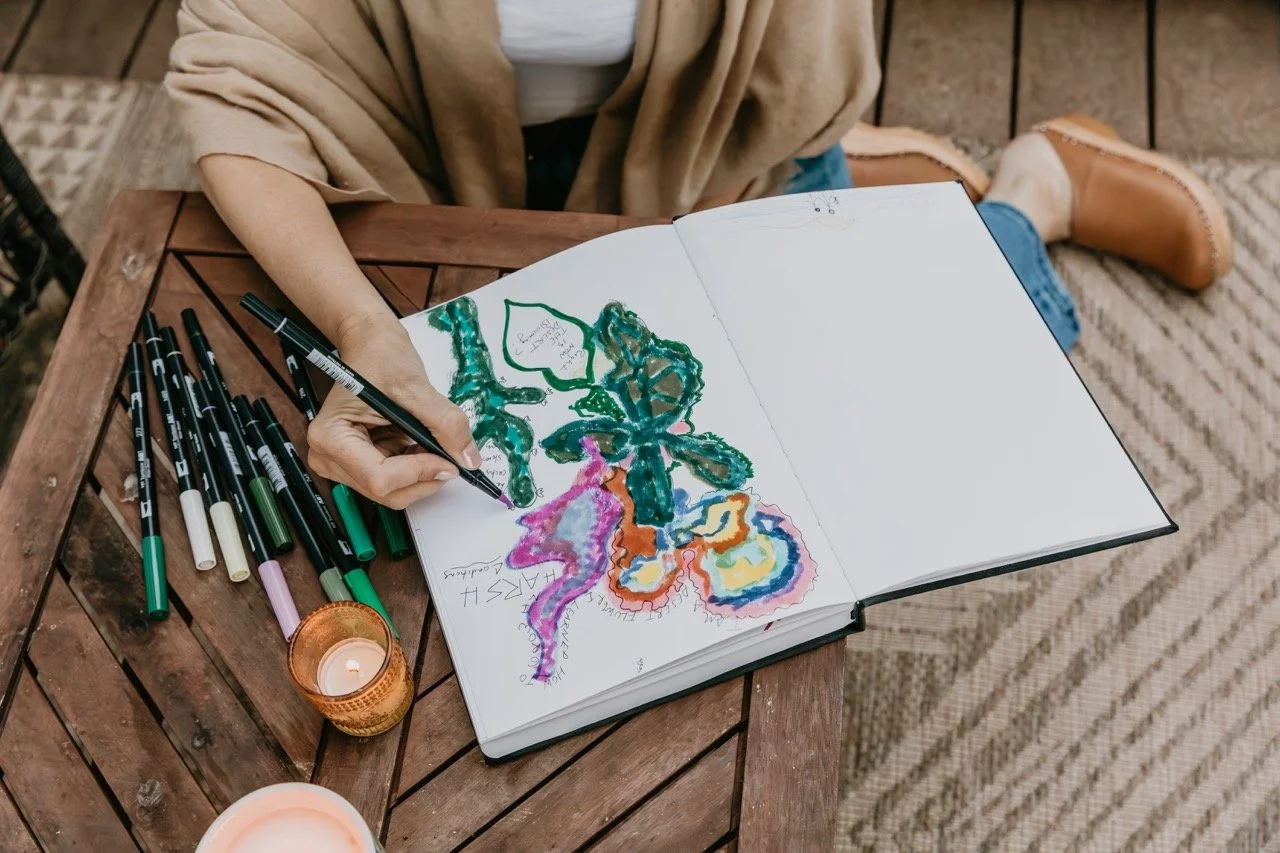
![Rachael Courtier creative journaling]()
Depth-Oriented Psychotherapy & Dreamwork
Using dreams, symbols, and the language of the unconscious to access and shift what lives in the deeper layers of your inner life.
-
![Creative journaling for therapy support]()
Creative Journaling & Expressive Inner Work
Bypassing the analytical mind to open a more direct line to the parts of you that words alone sometimes can't reach.
-
![Rachael Courtier reading by the lake in a peaceful setting for psychedelic assisted therapy]()
Ketamine Assisted Psychotherapy (KAP)
Creating the most supportive and effective container for psychedelic work.
-
![Books on psychedelic therapy and healing in Rachael Courtier’s therapy office]()
Psychedelic-Assisted Therapy Preparation & Integration
Weaving the insights and openings from previous psychedelic and KAP experiences into lived, embodied change.
-
![Rachael Courtier, internal family system therapist, seated in her bright therapy office]()
Inner Child & Attachment Reparenting Work
Tending to younger parts of you that learned early that closeness wasn't safe, and that may still be carrying those old wounds and unmet needs.




Your First Step Is a 15-Minute Conversation
Step 01
Reach Out
Send a message introducing yourself and sharing a little about what brings you here. I'll be in touch to schedule a consultation call.
Step 02
Consultation Call
We spend 15–20 minutes getting a genuine sense of what you're navigating and whether working together feels right. There’s no pressure, just an open, genuine conversation.
Step 03
Begin Together
If we move forward, we schedule your 60-minute intake and build an approach grounded in your nervous system, your history, and where you want to go.
From Clients Who Were Ready for More Than Insight
-
Attachment trauma that forms when early relationships teach us that closeness isn't safe, that our needs are too much, or that we must become someone different in order to be loved. This underlies many of the struggles people bring to therapy: depression, anxiety, insomnia, relationship difficulties, shame, and a persistent sense of not quite belonging. If it shows up most painfully in how you connect with yourself and others, this is likely the work.
-
Attachment-based therapy works with the understanding that our earliest relationships leave a lasting imprint on how we connect, trust, and regulate our emotions throughout life. Rather than just talking about those patterns, we work with the nervous system directly and use the therapeutic relationship itself as part of the healing. This is what makes it different from most talk therapy, and why it's often effective for people who have done significant therapy before without the patterns actually shifting.
-
I accept out of network (OON) insurance, and a superbill is provided after each session for potential reimbursement. A small number of Kaiser spots are available, with preference given to Kaiser clients who are also pursuing KAP. FSA/HSA may be accepted, please inquire.
-
Yes. All individual therapy and intensive sessions are offered online. In-person ketamine-assisted psychotherapy dosing sessions are also available upon request.
-
I generally recommend starting with weekly or biweekly sessions to build momentum and depth in our attachment-based work. From there, we adjust based on your needs, goals, and availability.
-
This varies widely depending on what you're working on. Attachment patterns that formed early and have been present for a long time often take time to shift, not because the work is slow, but because real change is layered and non-linear. We check in regularly about how the work is feeling and where you want to go.
-
Intensives and ketamine-assisted psychotherapy can both be offered as adjunct services alongside your existing therapy. Many clients come to me specifically for KAP, IFS-informed parts work, attachment-based and somatic-informed therapy, or psychedelic-assisted therapy integration while continuing with their primary therapist.
-
The best way to find out is through a consultation call. If you're a self-aware woman or someone who learned early that closeness wasn't safe, there's a good chance we'll work well together. This work is especially suited for those navigating attachment trauma, complex trauma, women with ADHD or neurodivergence, identity wounds (commonly found within the LGBTQ+ community), or relationship patterns that haven't shifted despite years of trying.
You don't have to know exactly what you need. You only have to take one small step toward it.
Reach out to schedule a consultation and explore if working together feels like the right next step toward real, embodied change.
Stay Connected With Rachael Between Sessions
Join My Newsletter
Honest writing on attachment, healing, and the inner life, delivered straight to your inbox.